 Creative Director Mack Simpson at Adverb lists some hard-won lessons he's learned—and offers good advise for the freshmen creatives pouring out of schools and into agencies. I would think such advise shouldn't have to be exclusive to "creatives".
1) Don’t play politics
There’s an element of politics in advertising just like in all things. There are egos to be stroked, tits for tats and angles to play—usually involving dealings with your clients. That’s fine, but avoid being sucked into internal agency politics. Those who play the bitch and gossip game are oftentimes compensating for their own lack of value added and are looking for allies to cover them. Don’t.
2) Fund your 401-(k)
Or whatever retirement plan your agency offers. When I talk to creatives, I am constantly amazed at how few do this. Look around your agency. How many grey-hairs do you see? Right. Unless your name is on the door, you won’t be doing this forever. Start off deducting a small percentage of your pay—say five percent—and add to your retirement plan every time you receive a salary increase. Get an eight percent raise? Toss three percent of it into your retirement and take home the other five. Step, repeat. You won’t miss the three percent you never saw and you’ll appreciate yourself for doing so later. Adding to your retirement plan is you paying yourself.
3) Don’t be late
To meetings, to recording sessions, to anything. It’s a matter of money and respect. Constantly being five, ten, fifteen minutes late is a trend I’ve seen on the up-tick with young creatives. Don’t do it. Not even to internal meetings with your Account Service teams. I’ve fired session talent, on the spot, for being late. Tardiness costs my clients money. I’ll fire you, too. It’s the same pool of cash and is disrespectful to boot.
4) Don’t be an ass, dickhead—you ain’t all that
Congratulations. You’ve won an award and, if you’re very talented and very lucky, it’s a Big One. Don’t let it go to your head. No one likes working with assholes, you included—especially if you’re simply an ass for ass’ sake. Karma’s a bitch. Remember, there’s a reason hubris is the most tragic of Greek Flaws.
5) Learn mechanics
Here’s another one that’s on the up-tick. Today’s portfolio schools teach screen-ready art. That’s great for your portfolio but learn print production technique so it becomes press-ready; the difference in Pantone sets, mechanical production, and even common sense things like naming your individual Photoshop layers. There was a time when everyone knew how to cut Rubylith (and if you know what that is you’re old like me). Now, no one knows how to make sense of your muddled, sixty-meg, thirty-filter Photoshop file, including you.
6) Think twice, speak once
There are a lot of very bold, bright people working in advertising, people who hold strong opinions and feelings about the work. Boldness is a virtue so, in meetings, you’ll be tempted to chime in with your own two-cents regarding whatever point is being discussed. This is a good thing, but be sure to speak only after you’ve thought about what’s being said—after really digesting the comments and analyzing them fully—and not just speaking “from the gut.” Your words will match your intelligence and someone might actually listen to what you have to say.
7) Don’t be afraid to stay
Much has been said about jumping jobs in order to climb the salary ladder. I have friends who change jobs almost yearly. That’s all fine and dandy, but if you find someplace where you’re doing good work, are rewarded for what you do and feel at home with your fellow ad monkeys, don’t be afraid to stay. There’s more to life than moving boxes.
8) Concept on the fly
I learned this one from an old boss of mine, Jim Hradecky, and it has paid off in spades. If you are able, in a client meeting, to brainstorm on the fly and throw out breathtaking ideas that leave the clients nodding their heads, by all means, do so. You will shock and awe them in amazing ways, and buy-in on the back end will become amazingly easy. If, instead, the ideas you toss out amount to “make the starburst fifteen percent larger,” I may slap you myself in the meeting.
9) Learn the business of advertising
We work in a business, people. A business. Learn what your agency’s profit centers are. Hell, learn what a profit center is. Know how your agency really makes money—media, production, billable time—and work (and think about how) to maximize it. Your bonus check will reflect your efforts—and might lead to your owning a successful shop someday.
10) Help someone else
If you’ve found a job in advertising, I’m Ivory Soap-certain you owe your position, at least in part, to employed ad monkeys who helped you along the way. Pay it back. Look at student books. Offer feedback and advice. Pass out phone numbers and keep your ears open to who’s hiring. Help out up-and-coming juniors who, just like you once did, need encouragement and direction. You won’t regret it and those you help won’t forget it. I know I haven’t.
via Adverb
Sunday, September 10, 2006
Free Advice: Freshman Guidelines


Trend: User-Created: LonelyGirl15 Exposed (sort of) Part Deux

LA Times reports that online forums reveal connections to Hollywood talent agency CAA, and a trademark registration of the name "lonelygirl15" by an Encino lawyer.
Saturday, September 09, 2006
Trend: User-Created: LonelyGirl15 Exposed (sort of)
Lonelygirl15 blahblahblah.
I am not big on soap operas (which her "content" essentially is at it's core). The interesting part, for me, is her construct and her mass effects. Needless to say LonelyGirl15 has been revealed as crafted by a group of filmmakers as an "art project". Here's the letter they wrote to their fans on the forum explaining LonelyGirl15.
Eh. Still not sure. Could be the conspiracy theorist in me that requires greater meaning behind world events, or it could be the iconoclast in me who likes the idea of pulling the world's biggest prank over on America's eyes. The positivist in me says, well, if this isn't that mass prank and it is simply what it is, then that trophy for biggest prank is still up for grabs!
If we are to believe these pseudo-confessors: "Our intention from the outset has been to tell a story-- A story that could only be told using the medium of video blogs and the distribution power of the internet. A story that is interactive and constantly evolving with the audience."
They could simply be extending the mystery on us to lower a bigger boom later and covering up the greater plot. Or this is just it.
Zephoria's commentary review:
"I like the idea that it is an art form but i also think it's part of what Henry Jenkins calls Convergence Culture. Regardless, it's super cool that people are using new media to create narratives. They are telling their story, truth or fiction. Of course, this makes many people very uncomfortable. They want blogs and YouTube and MySpace to be Real with a capital R. Or they want it to be complete play. Yet, what's happening is both and neither. People are certainly playing but even those who are creating "reality" are still engaged in an act of performance. They are writing themselves into being for others to interpret and the digital bodies that emerge often confound those who are doing the interpretation. In many ways, this reminds me of the Fakester drama during the height of Friendster. As one of the instigators behind the Fakester manifesto explained, "none of this is real." I won't get all existential on you so we'll leave it at that."
Again, blahblahblah on the girl's "content", I hardly have the patience to sit thru a whole episode of her damn rantings anyway.
So let's now take measure of the audience commentary right about now.
NOTE: The vitriolic tones like "Fake. Shut up", and "Fake ass ho", or "Ya wats the point of not watching it just cause it may be fake?", and the insightful "Yeah, have fun with all your actress/actor friends! Go drink cocktails! Fake, and its so obvious - right from the start."
The irony to these (perhaps few? yet loudest!) opinions is that the ratings are still at 300,00+viewings in one day. So...whose winning? Perhaps this guy sums it up best: "HOT (and entertaining) rules above fakery." Now that's the American audience I still invest my faith in.
NOTE: Despite the current audience heckling, I do give it up for the crew - THE CONTENT CARRIES ON LIKE A GOOD PRODUCTION SHOULD. The actors keep reciting their lines and never break character (perhaps they just have a backlog of pre-edited episodes and need to get thru them to get to the plot turn?). Because, remember, all audience sentiments shift. That is, in fact, a positive.  Scepticism signals that audiences are passionately engaged with your illusion. Any good improvist knows that audience sentiment could just as easily shift back after this very slight reveal behind the backstage curtain. Great illusionists don't panic at a bit of audience pushback - jeers, in fact, will make the magic that much bigger as the zealots out-cheer the jeers and the sceptics get shocked at the bigger successful trick. What I know of audiences, is they jeer not soley because they hate you, but because they simply demand more from you. They want "more meaning", "more bang" for their investment. They actually want you to win, they want you to win them. Afterall, they did stop on this corner to watch you do your trick. Audience jeers are simply an invitation, they are calling you out to amaze them. And they'll actually stand and wait for another minute to see if you give it to them, or not. I don't think the ratings will go down. Yet. These jeers don't mean the illusion has to be 'game over'. Yet. The keen illusionist needs to know to drop a big one quickly, and with great finesse. If this is truly it, and there is no banger coming - then you deserve the jeers off the stage.
  So the question is there more trick coming? I assume yes. Or there should be. If they're smart illusionists. Hopefully, these filmmakers have one good one (or more) up their sleeve for these willing audiences. I suspect they do. Afterall, this "confession" of just being filmakers who embarked on an experiment is not much confession at all really - we still don't know the "meaning" of it all, it is not a big enough "point", people still want to see how your trick ends. These illusionists have (perhaps inadvertently) bought themselves a reprieve and a dramatic drumroll for a really big flourish. But without doubt the spotlights are officially on...
In these times of such social confusion, let us look to the puppets to give us guidance (Live from the LonelyGirl15 "Press Conference"):
Friday, September 08, 2006
Trend: User-Created: Camp Camp
Get yourself published!
The CAMP CAMP Project is a national photographic exhibit and accompanying book piecing together camp photographs from the seventies, eighties, and nineties to create an American story of who we are and how we got to be this way. 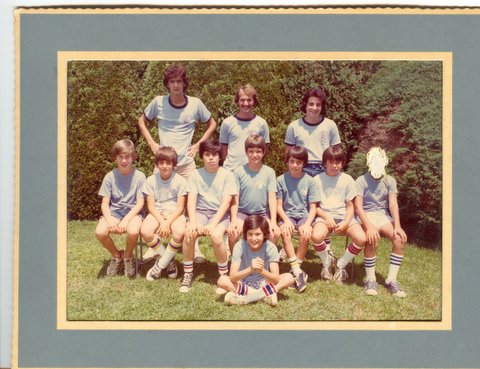
If you have photos that say more than words, stories that say more than photos, camp year book inscriptions submit them and get featured in this mass-created book.
via Trendcentral
Culture: Research Zeitgeists Part Deux
 Way back, I posted about http://www.grocerylists.org/ that gathers ongoing user submissions of mundane grocery lists.
Here is a similar site compliling mass To-Do Lists.
To Do Lists reveal some interesting clues about our collective intentions, similar to other sites like 43 Things and 43 Places which ranks user-submissions of goals.
ALSO: another database of Alt Research methods is being compiled here
Inbox of Immaturity
A postermanchild for the IOI. Thanks to mcwet for letting us know that Mark from our old Holiday Inn spots would be performing in the Twin Cities this Saturday. Now a few more links:
Party of the Penguins: Australian wine co. offers some advice.
Meat-beating: ESPN writer cannot plead ignorance.
A more serious beating: Seemed to be on repeat on Fox yesterday.
D.C. water: Buy bottled.
Almost made it: That St. Lawrence River is long.
Le Montage: The next Broken Lizard?
Wednesday, September 06, 2006
Trend: User-Created (Kinda): Sign-off
Katie Couric asks viewers to help come up with her signature sign-off. (She's "racked her brain, but nothing has felt right.")
I found the way (in particular, when) she/CBS did this interesting. Asking people at the end of her first show to log on to cbsnews.com and give a suggestion. My initial thought was why not build the buzz beforehand by running a contest to write Katie C's close? At the end of the program the "winning" entry would be revealed as she naturally signed off. Assumedly, a high percentage of participants would have watched and waited with bated breath. (I never did know how to spell that phrase.) Then again, it seems she did pretty well anyway. And would buzz have equaled viewers, loyal viewers at that? Surely if the first segment included her screaming that she's tired of these motherf'n snakes on this motherf'n network, she'd keep the talk going. But seriously, is this giving consumers too much power or power they don't really want? Would Cronkite's line go down in history if Susan from Montana had created/submitted/won with it in 1960-something? And would it have made sense to really try and make this opportunity more viral and interactive, etc. (as you'll see on the site, it's "thanks for your submission")?
Two more reasons I posted this:
1. Reminder to recommend Good Night and Good Luck to any who haven't seen yet.
2. Gawker's observation that she's committing a serious fashion no-no with the white blazer.
Hasta tomorrow.
Tuesday, September 05, 2006
Modern and awesome
The client challenge: Get younger people to visit the museum. The non-advertising answer: 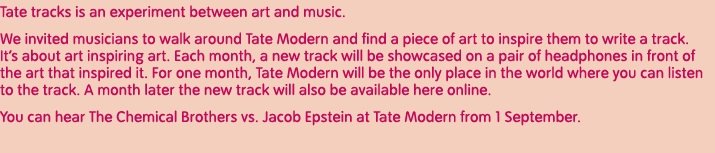 Don't know who came up with this (or if the agency was even involved), but these are the ideas/solutions that we should be bringing to the table.
via Protein Feed.
Monday, September 04, 2006
Industry: State of the Blogosphere: Pew Study
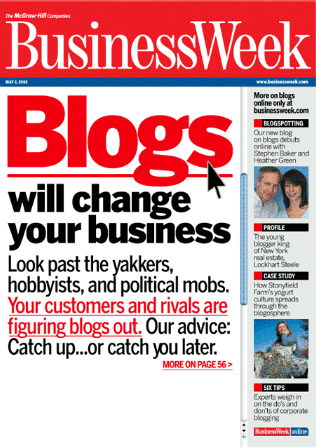 The Pew Internet & American Life Project released new data recently that offers a snapshot of the blogosophere as of April 2006. Among the key findings:
* 8% of consumers (12 million US adults) keep a blog, up from 7% last year.
* 39% of consumers (57 million US adults) read blogs, up from 27% last year.
When asked why they blog, the number one reason given (77%) was "to express themselves creatively". Other reasons included: 76% to "document personal experiences", 59% to "stay in touch with friends and family".
Trend: Politics 2.0: Youth Engagement (UK Edition)
 Participation Works is an online gateway to the world of children & young people's participation.
The gateway provides a single access point to comprehensive information on policy, practice, networks, training and innovative ideas from across the UK. The Being Heard website has been designed by the UK Hansard Society with the aim of inviting young people to engage with political issues and political decision-makers.
The aim of Being Heard is to build young people’s level of political awareness and participation so that they can play an active role in the democratic processes affecting their lives.
Being Heard is also a consultation space for decision-makers to engage with young people and their ideas, experiences and opinions. MPs on the Home Affairs Select Committee are taking advantage of a new Hansard Society initiative exploring how mobile phones can be used to connect young people and politicians. They want young people to use their mobiles to give the committee their views on the criminal justice system.
Citizen Calling pilots the use of mobiles as a tool of communication to get members of the public more involved in the work of Parliament. Messages (photo, text or video) are sent to the project’s phone number (07786201247) and hosted on www.citizencalling.com.
Trend: Bankrupt!: Real Wages vs Productivity
 A NY Times article reports that the median hourly wage for American workers has declined 2 percent since 2003, after factoring in inflation. The drop has been especially notable, economists say, because productivity — the amount that an average worker produces in an hour and the basic wellspring of a nation’s living standards — has risen steadily over the same period.
As a result, wages and salaries now make up the lowest share of the nation’s gross domestic product since the government began recording the data in 1947, while corporate profits have climbed to their highest share since the 1960’s. UBS, the investment bank, recently described the current period as “the golden era of profitability.”
Until the last year, stagnating wages were somewhat offset by the rising value of benefits, especially health insurance, which caused overall compensation for most Americans to continue increasing. Since last summer, however, the value of workers’ benefits has also failed to keep pace with inflation, according to government data.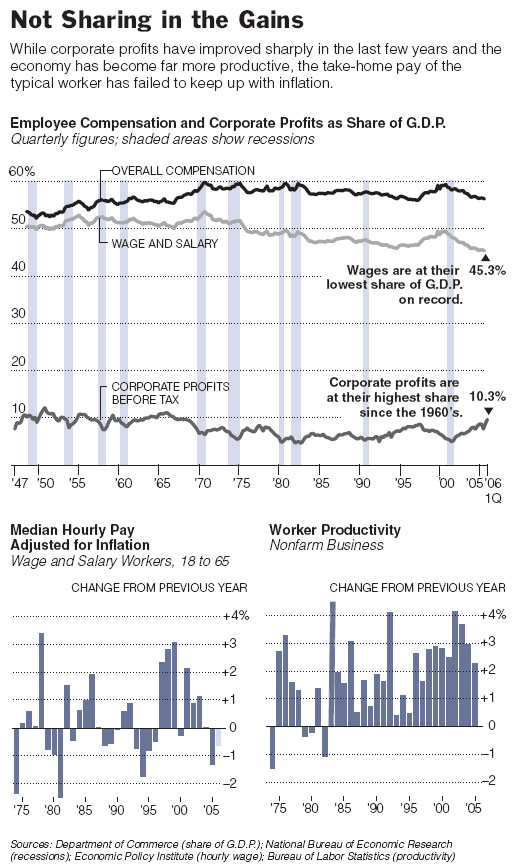
At the very top of the income spectrum, many workers have continued to receive raises that outpace inflation, and the gains have been large enough to keep average income and consumer spending rising.
Economists offer various reasons for the stagnation of wages. Although the economy continues to add jobs, global trade, immigration, layoffs and technology — as well as the insecurity caused by them — appear to have eroded workers’ bargaining power.
Trade unions are much weaker than they once were, while the buying power of the minimum wage is at a 50-year low. And health care is far more expensive than it was a decade ago, causing companies to spend more on benefits at the expense of wages.
Together, these forces have caused a growing share of the economy to go to companies instead of workers’ paychecks. In the first quarter of 2006, wages and salaries represented 45 percent of gross domestic product, down from almost 50 percent in the first quarter of 2001 and a record 53.6 percent in the first quarter of 1970, according to the Commerce Department. Each percentage point now equals about $132 billion.
Total employee compensation — wages plus benefits — has fared a little better. Its share was briefly lower than its current level of 56.1 percent in the mid-1990’s and otherwise has not been so low since 1966.
Over the last year, the value of employee benefits has risen only 3.4 percent, while inflation has exceeded 4 percent, according to the Labor Department.
For most of the last century, wages and productivity — the key measure of the economy’s efficiency — have risen together, increasing rapidly through the 1950’s and 60’s and far more slowly in the 1970’s and 80’s.
But in recent years, the productivity gains have continued while the pay increases have not kept up. Worker productivity rose 16.6 percent from 2000 to 2005, while total compensation for the median worker rose 7.2 percent, according to Labor Department statistics analyzed by the Economic Policy Institute, a liberal research group. Benefits accounted for most of the increase.
The most recent recession ended in late 2001. Hourly wages continued to rise in 2002 and peaked in early 2003, largely on the lingering strength of the 1990’s boom.
Average family income, adjusted for inflation, has continued to advance at a good clip, a fact Mr. Bush has cited when speaking about the economy. But these gains are a result mainly of increases at the top of the income spectrum that pull up the overall numbers. Even for workers at the 90th percentile of earners — making about $80,000 a year — inflation has outpaced their pay increases over the last three years, according to the Labor Department.
“There are two economies out there,” Mr. Cook, the political analyst, said. “One has been just white hot, going great guns. Those are the people who have benefited from globalization, technology, greater productivity and higher corporate earnings.
“And then there’s the working stiffs,’’ he added, “who just don’t feel like they’re getting ahead despite the fact that they’re working very hard. And there are a lot more people in that group than the other group.”
In 2004, the top 1 percent of earners — a group that includes many chief executives — received 11.2 percent of all wage income, up from 8.7 percent a decade earlier and less than 6 percent three decades ago, according to Emmanuel Saez and Thomas Piketty, economists who analyzed the tax data.
Listen to more here at NPR
Sunday, September 03, 2006
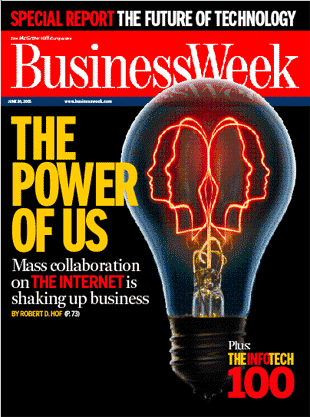
Trend: User-Created: This Week in Co-Creation
 Rocketboom interview with Steve Rubel
Rocketboom co-conspirator Chuck Olsen (from Minneapolis) has finally completed his Blogumentary
"Where Are They Now" style interview with user-created legend, Gary 'Numa Numa' Brolsma.
In a new approach to telling stories from the front lines of post-Katrina New Orleans, the New Orleans Video Access Center (NOVAC) has collaborated with local filmmakers to produce a series of short documentaries called The Drive. It's an extensive driving tour through four of New Orleans' most devastated neighborhoods.
Saturday, September 02, 2006
Trend: Moms Rule
 Focus groups and consumer panels are nothing new to foodservice, and they're nothing new to KFC, either. But KFC is focusing on a different demographic with its new advisory panel — made up of moms.
The 13-member panel, the first of its kind for the chain, was treated to an all-expenses-paid trip to Louisville last week for its initial meeting. It includes an author from California, a manager at a KFC restaurant in Florida and a Louisvillian with twins who runs her own event-planning company.
KFC, a subsidiary of Louisville-based Yum! Brands Inc., has organized polls and focus groups in the past, but company spokeswoman Laurie Schalow said there has never been a formal customer advisory board from the same demographic.
The group, called the KFC Moms Matter! Advisory Board, isn't unique. McDonald's Corp. launched a Global Moms Panel in May that includes customers from Germany, Argentina, England and the United States.
The groups have been formed amid growing concern that fast-food restaurants are contributing to obesity, especially in children. KFC, for example, was sued in June by a retired doctor from Washington, D.C., over its use of partially hydrogenated oil in its fried chicken and other items.
via Louisville Courier Journal
Trend: Conscious Consumption: Good
 Aiming to promote social, political and environmental change by educating young people on world news and issues and empowering them to take action, GOOD is touted as a "cultural magazine for people who give a damn”.
Highlights from the inaugural issue I HEART AMERICA, include a piece by James Surowiecki on America's place in the world, a guide to midterm elections, commentary by Jeff Sachs, Karrie Jacobs and Kurt Vonnegut, and an intriguing look at The Boarder Film Project.  Content aside, one of the publication’s best attributes is its Choose Good program, which allows subscribers to select an organization from the company’s non-profit partnership database to which they'd like their $20 subscription fee to be donated. Teach for America, UNICEF, Witness and Creative Commons are just three of the 12 partners.
via Trendcentral
Friday, September 01, 2006
Inbox of Immaturity
Here's my fab 5 for the week:
The "Old E" in Entourage here
Oh, George Allen: Diss Ingenuous video here
Fun game from Aki here
Lassie Wins here
Holy Crap! here
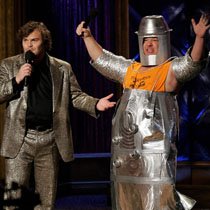
Also passed around amongst the fellas, we know our 6 degrees: Matt Leinart's going to be a dad. He is playing qb for the Arizona Cardinals --> Harry Morton (Lindsay Lohan's bf and son of Peter Morton) wants to name Cardinals' Stadium "Pink Taco Stadium" after the restaurant chain he owns. Leinart's also friends with Nick Lachey who I think has some connection to Jessica Simpson who is now in love with John Mayer (overchicked!) and was at the VMA's which sucked (see above image), and that makes me and my buddies want to drink.
Happy Labor Day!
Wednesday, August 30, 2006
Before Your Next Presentation

Take a look at one or more of these. Knowhr.com listed their top 10 presentations ever. Influx Insights favors Dick Hardt's, and I must agree he proves that powerpoint doesn't have to be typical or boring. Just thought I'd pass along for inspiration. The link may be ancient by blog standards, but the speeches are timeless.
Yes, I know that was cheesy. But does that make it "Crumbelievable?"
Thanks to The Long Tail for reminding me about the solid Colbert report last week on the fragmentation of media.
Tuesday, August 29, 2006
T-Minus 3 Days

Looks like drafting season's not done after all. A new type of fantasy league is changing the game and targeting the other gender. And they'll get to know Kevin better than I ever will Larry Johnson.
The fee is $9.95 to play for a full 7-week season. Start by picking 3 husbands based on the "husband's profiles and your women's intuition." On Sunday ("Game Day"), the 20 husband's responses to the week's domestic scenario are revealed and scored by the "Official Panel" will score each husband's response and tell you why the husband received his score. Keep your same husbands or pick a new 3 each week of play as you learn more about each husband by their responses to each scenario.
Disclaimer: While "The Official Panel will also tell us ladies the 'Healthy Relationship' response for the domestic scenario to help us out with our relationship situations," "this web site and its content is for informational and entertainment purposes only and is not intended to replace or substitute any professional advice. If you have specific concerns or a situation in which you require professional or medical advice, you should consult with an appropriately trained and qualified specialist."
End on happy note. You can win this: 
Sunday, August 27, 2006
Trend: User-Created: YouTube Updates
 Could YouTube be the MTV of our kids' generation?
"More and more viewers want to cook as well as dine, which makes the TV story of the year the story of a website: YouTube," the Associated Press reports. The AP adds that – though YouTube is less than a year old – it plays more than 100 million videos a day, and 65,000 new ones get uploaded to it each day (I've also read that its costs are $1 million/month to provide this service).
Some of this "channel's" fare (c'mon, like you don't know) is funny, some sleazy, some completely inane, some just mundane, some favorite broadcast TV clips recycled by fans, but this range of possibilities and no-rules environment is part of the appeal. And there is no denying YouTube's popularity.
To compete with Yahoo Music, YouTube is "talking with record labels to post thousands of music videos online,"Reuters reports . Newsday in New York recently ran an in-depth report on the YouTube phenomenon.
via NetFamilyNews
Trend: User-Created: Uth TV
 Teens watch a lot of TV, but they don’t usually get to make TV shows. “Your typical teen can’t walk into UPN and say ‘I wanna do a TV show,’” says Carl Rosendahl, CEO of Uth TV, a burgeoning broadcast outlet for teens and youth. “You need adults in the mix to make those deals happen, to get distribution. But the difference between us and other adults is we let the youth produce the content.”
Rosendahl, a veteran filmmaker and video production specialist, started Uth TV to give teens and youth a chance to get on the air. He recognizes that they need to be heard, but he’s not about to tell them how they should voice their opinions. Instead, he lets teens tell their own tales. Uth TV debuted on UPN in the San Francisco Bay Area in the summer of 2005 with two TV shows, “Elements” and “Speak On It.” Both were produced — from filming to broadcast — by a team of teens using Power Mac G5s and Final Cut Pro at studios in San Mateo and Oakland, California.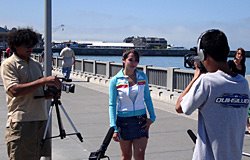 “It’s completely run and produced by youth,” says Eric Eng, a producer for “Elements.” “They’re our shows. We came up with the ideas, created their styles and made them our own. Uth TV is really an outlet for youth to show off their talents.” The producers, editors and directors at Uth TV have used those talents to fuse raw video footage, music, digital stills and voice tracks into energetic, sometimes frantic, creations.
 In 1980, Rosendahl founded Pacific Data Images (PDI), a movie effects shop and film production company. During the next 20 years, Rosendahl and his company produced more than 700 commercials and crafted visual effects for more than 70 films. PDI later teamed up with DreamWorks SKG to make the animated smash hits “Antz” and “Shrek.”
After years in production, Rosendahl was ready to explore new horizons. “I really wanted to get back into the content side in a really meaningful way, do something with a little bit of social relevance,” he says. “I was looking at a lot of things that teens are creating and I was really impressed with the quality and the voice. But with teens, I really believe that they don’t have enough of an opportunity to get their work seen. The outlet channels are just too few and far between. It’s important to create those channels, to give them a voice that can be heard by a mass audience.”
Rosendahl set up a studio in the San Francisco Bay Area. He equipped it with Power Mac G5s loaded with Final Cut Pro and Adobe After Effects. “Most of the students I talked to were fluent with Final Cut Pro,” he says. “We looked at all the non-linear video editing solutions and Final Cut was simply the best. It’s almost the de facto standard for video editing now. The responsiveness in playback is really nice and the whole general pipeline between applications like Final Cut Pro, Motion and Adobe After Effects works very well.”
With a top-notch studio set up, Rosendahl gathered his production crews from local high schools and video workshops, hired a producer to guide his new editors and turned his team loose.
Read more here
Saturday, August 26, 2006
Trend: Information Aesthestics Update
We've posted before about a delightful trend of graphic artists and engineers and programmers re-mapping our information world in engaging graphical forms here, here
and here.
Some updates this week: 
Map of global takeover of McDs and Starbucks, analysis of the world's transportation methods, waterworlds , arms around the world, government red tape.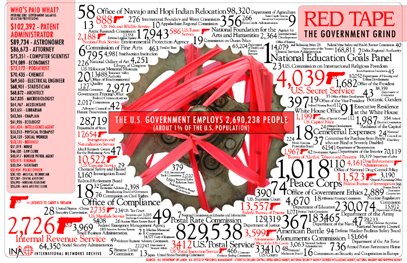

News stories are highlighted at Mapped Up, and a balloon appears with a headline; clicking on the balloon sends you to the source of the story. 
Newsmap is an impressive news headline visualization software. The visualization includes horizontal, color coded bands for categories and larger font sizes to indicate the number of related stories. This treatment not only illustrates the hottest topics of the moment, it also reveals underlying patterns in news reporting.


 Seed Newsvine


